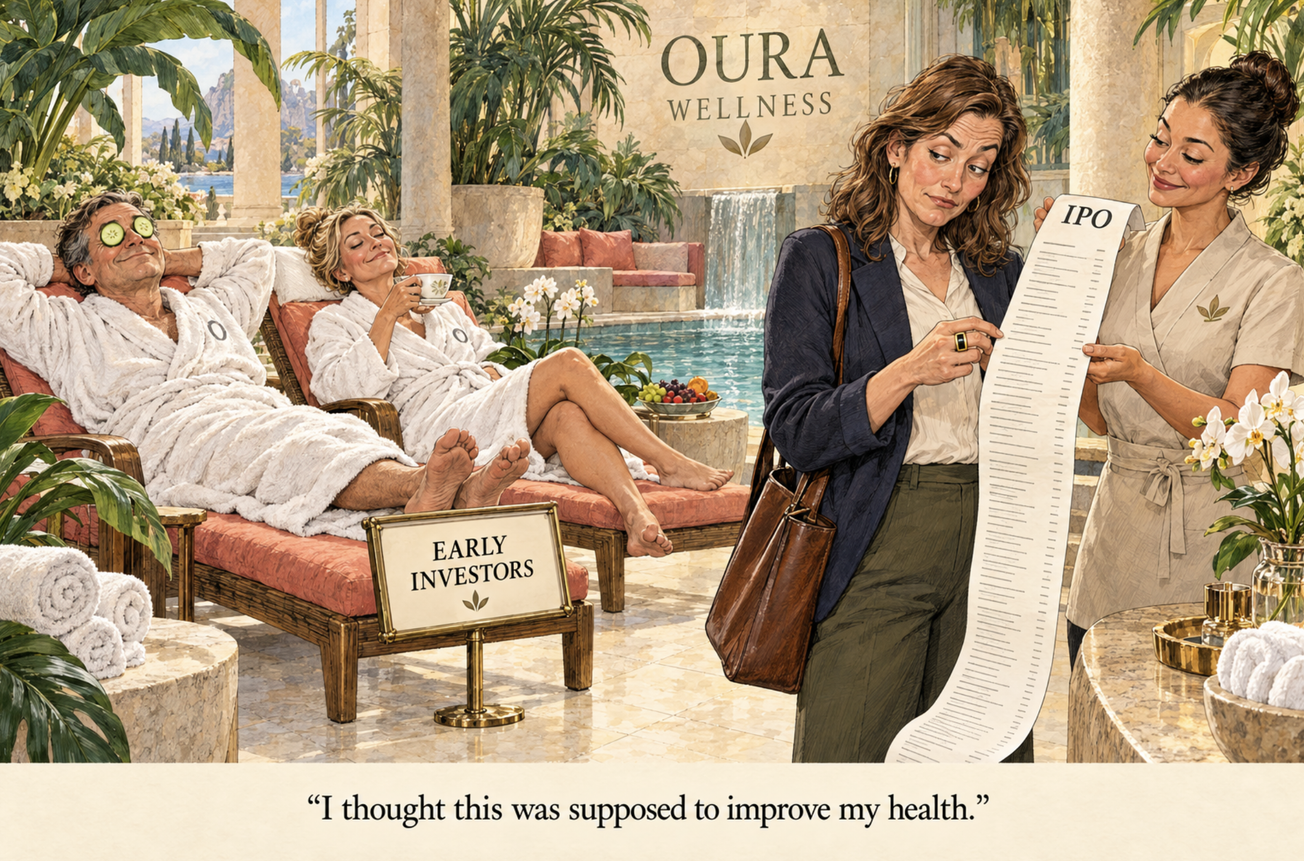
Oura $OURA postponed their IPO which was a mild surprise to me. We had quite a few reasons to avoid the deal but overall reactions were very good. They got a bit greedy with terms on this one so that should be a signal that investors are tired of getting the short, dirty end of the stick on these deals.
Healthcare is a $5T business in the US that is in the process of doing a 180. It's become abundantly clear that the system doesn't take care of your health, If you care about it comes down to your own efforts and resources.
Doctors and industry executives have realized that the first line of inquiry for most is already a Google search, a chatbot, or a wearable device and companion apps.
Consumers wanting to move to the next step of diagnosis and treatment either don't want to go through a "middle man" or don't even have the option of one since they lack access to local options or a doctor.
The trend was accelerated by arrival of GLP-1 which consumers wanted and plans didn't want to pay for. In the end the demand overcame the resistance and consumers got what they wanted. Eli Lilly $LLY was the first major pharma to understand this and shift their company strategy to align with it. (Lilly has indicated interest of $100M in the Oura $OURA IPO.)
Oura dominates the ring form factor of the wearable market but broader competition from Apple $AAPL, Garmin $GRMN and Whoop (private) makes the positioning more textured. Let's get into it.
Wearables, Wellness, Performance and Healthcare
It's early innings for wearables in healthcare. Much of the demand so far as been around performance (Garmin, Whoop), wellness (Oura), and gadgetry (Apple Watch.)
Healthcare "wearables" have been more serious and specialized devices - CGM monitors, insulin pumps, hearing aids, neurostimulators and pacemakers.
Consumer-focused healthcare options like Function Health offer more serious medical insight and diagnosis than any wearable.
This makes the healthcare narrative for Oura or any of these other consumer device companies tenuous. Clinical benefits and improved outcomes have yet to be validate. Approval in HSA/FSA benefit plans is helpful in terms of payment options but that's all.
I've had experience with all these devices and the selection really depends on your use case and personal preferences. I was impressed with Whoop for a few years as it aided my performance and recovery on the tennis court. Years ago I switched to Garmin because it handles multiple sports including biking, running and golf. Golf is especially important as it includes course maps and accurate distances to the green. Garmin also has the advantage of not requiring a monthly subscription like Whoop.
The Apple watch has never worked for me because it requires very frequent charging. The Garmin watch runs for a week or more on a charge. It does vary based on how it's used but the Apple watch suffers from an absurdly short battery life.
The Oura is the device of choice if your aim is general health, wellness, and sleep quality in particular. I'd say it sits squarely in the leadership position for the "casual" and more fashion conscious consumer. Oura also offers specific female-oriented positioning as a monitor of fertility and menopause. This accounts for their very high market share with women versus Garmin and Whoop.
There is some "device stacking" that goes on where Garmin or Apple watch users use an Oura too so they can remove their watch at night (the Apple needs to charge!)
Real Reasons for the IPO Fail
The "market conditions" may not be perfect right now but the best deals can get done in any market.
This was not one of those best deals:
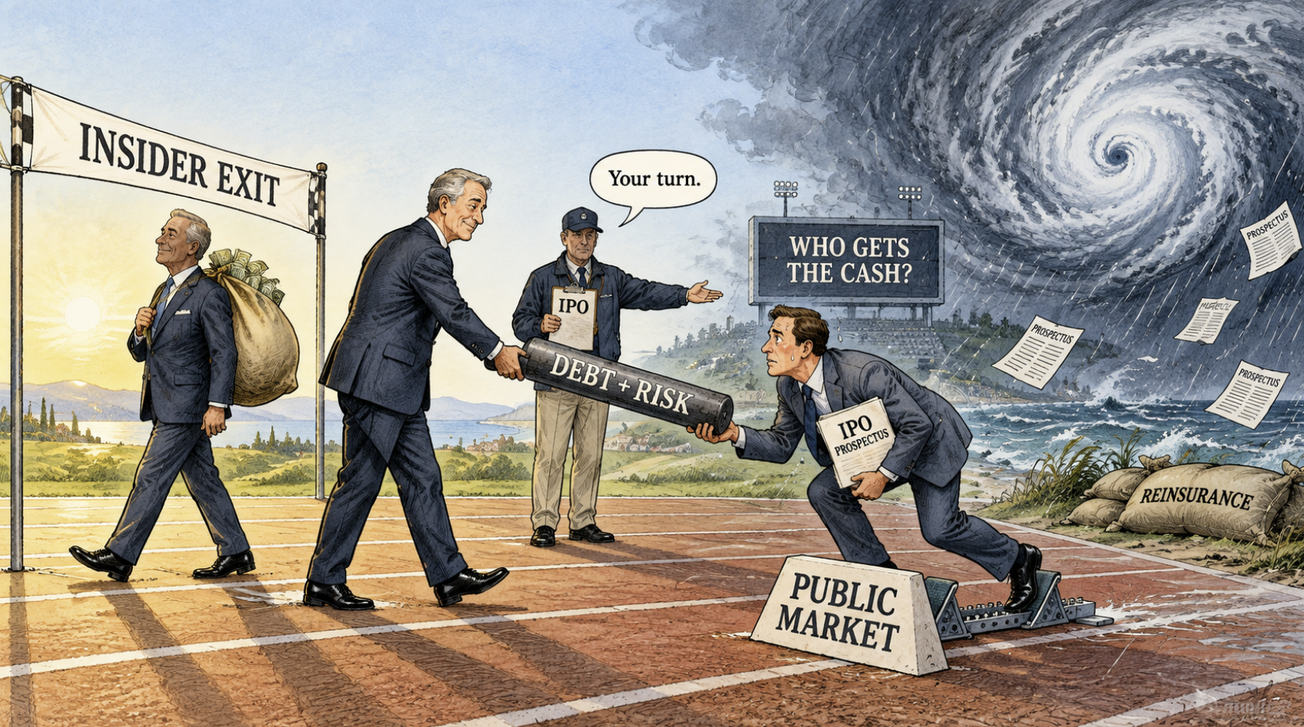
- Over 70% of the offering was secondary shares with Forerunner selling their entire 28.7M share position.
- Most of the primary share proceeds go to settle outstanding obligations so the company nets only $6M from a $2B offering!
- The company used $1B per-offering in what was basically a dividend to existing investors. (See other examples in the IPO Pump and Dump.)
- Growth is slowing if you adjust for the Ring 5 launch and gross margins have not recovered to prior levels.
- Competition is intensifying and the elephant in the room is Apple who is expected to launch a screenless device (it could be a ring) that taps into this market demand and pairs with the iPhone and/or Apple Watch. That will materially eat into the current market share Oura enjoys.
- Limited disclosure on important metrics like ARPU, CAC, LTV and cohort data - there are competitive reasons not to give away too much data but it also means investors have a hard time getting conviction.
This is a good company that got too aggressive with valuation after cashing out existing shareholders and facing intensifying competition.